About me
Edmund Warde writes about money the way it is actually learned — slowly, honestly, and mostly before work. The Quiet Fortune (Volumes I–III) is financial education in plain language: no hype, no shortcuts, and no advice — education, so you can make your own decisions.
The series is written for people who were never handed a map: first savings, first investments, first quiet wins. It is the book the author needed twenty years ago.
The books
The Quiet Fortune — a three-volume series on building wealth without noise. Each volume stands alone; together they make one path.
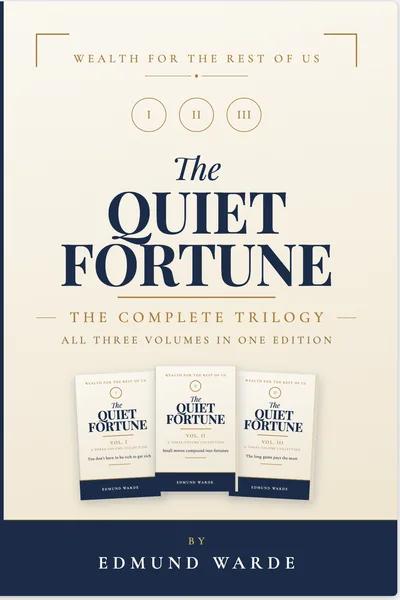
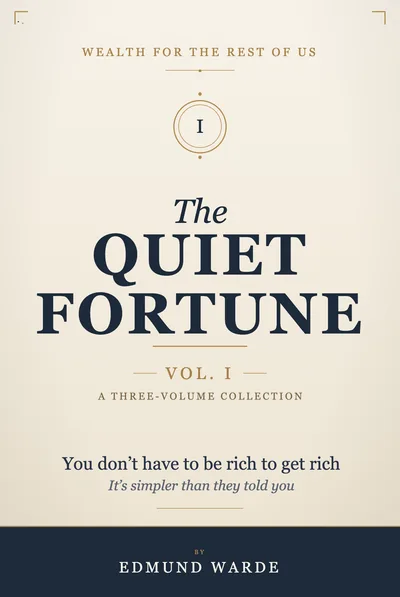
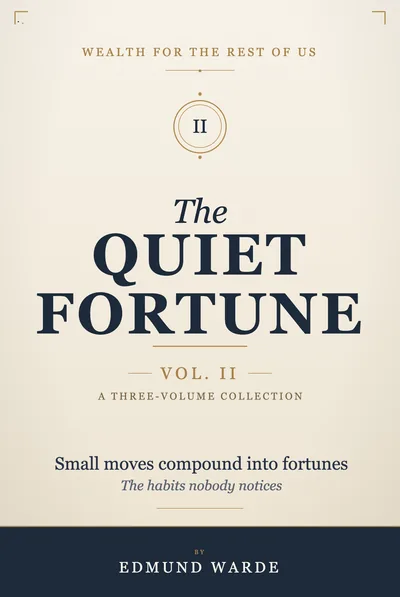
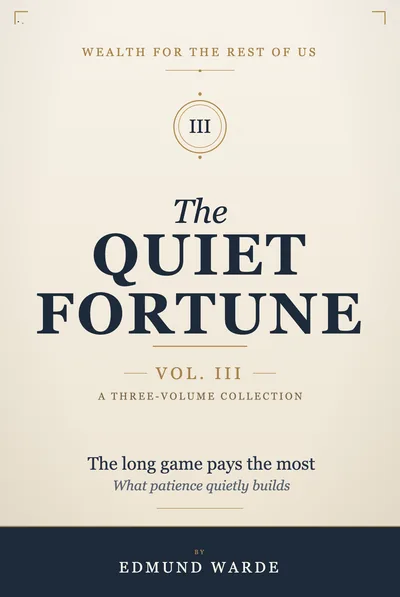
The complete trilogy collects all three volumes in one book. Each volume also stands alone — here is how to choose.
What to read
New to the series? Start with Volume I — it lays the foundation everything else builds on. Already saving and investing? Volume II or III will meet you where you are; each stands on its own.
Want everything in one place? The omnibus collects all three volumes in a single book.
Question me
How big should an emergency fund really be?
Three to six months of essential spending is the usual answer, and it is a reasonable one — but the number that matters is months of your spending, not months of your income. Start with one month. Most of the benefit arrives early, and a fund you actually finish beats a larger one you abandon.
Should I save or pay off debt first?
Usually both, in a specific order: build one small emergency fund first, then attack high-interest debt hard, then build the fund properly. Without any buffer, the next unexpected cost goes straight back onto the card and undoes the progress. The buffer is not competing with the debt — it is what stops the debt regrowing.
How much of my income should I actually save?
There is no correct percentage. Save the largest amount you can sustain without it collapsing in month three — for many people starting out that is five percent or less, and that is fine. What matters far more than the rate is that it happens automatically, and that it rises when your income does.
Who is Edmund Warde?
Edmund Warde is the pen name of the author of The Quiet Fortune, a three-volume series of plain-language financial education published under the banner Wealth for the Rest of Us. The pen name is used openly. He holds no degrees, licences or professional qualifications in finance and claims none.
Is The Quiet Fortune financial advice?
No. It is financial education. The books explain how money, saving, debt and investing work so you can make your own decisions. They do not recommend specific products, securities or actions, and nothing in them is a recommendation to buy or sell anything.
Have a question about money or the books? Ask — the best questions become pages here.
Write to me
If you have a money question you cannot find a plain answer to, or something to say about the books, write to me directly at hello@edmundwarde.com. The best questions become pages here.
Or come and say it where the conversation already is — Instagram and TikTok, both @edmund.warde. The books are on my Amazon author page.